Sacred spaces / 5 min read
Modern Corian Mandir Design: A Practical Guide for Indian Homes
From the first wall measurement to the final lighting detail: design a prayer space around the rituals you actually practise.
By SULoTA Editorial · Published

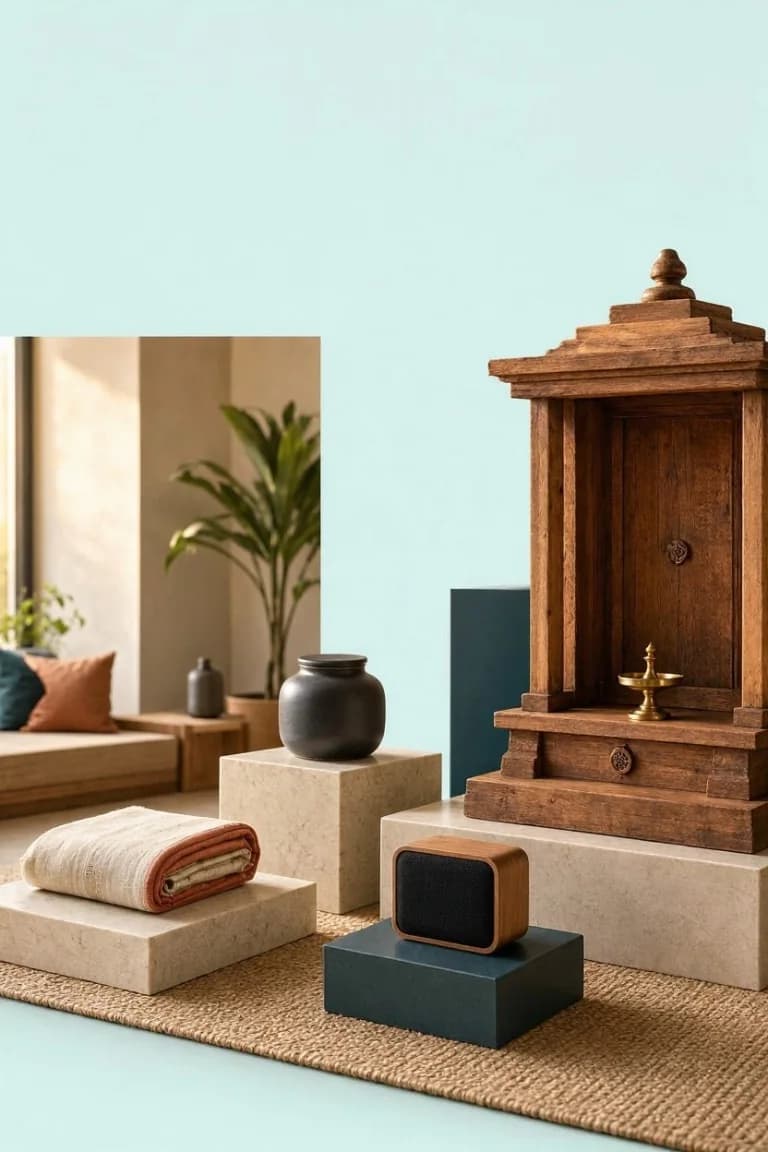
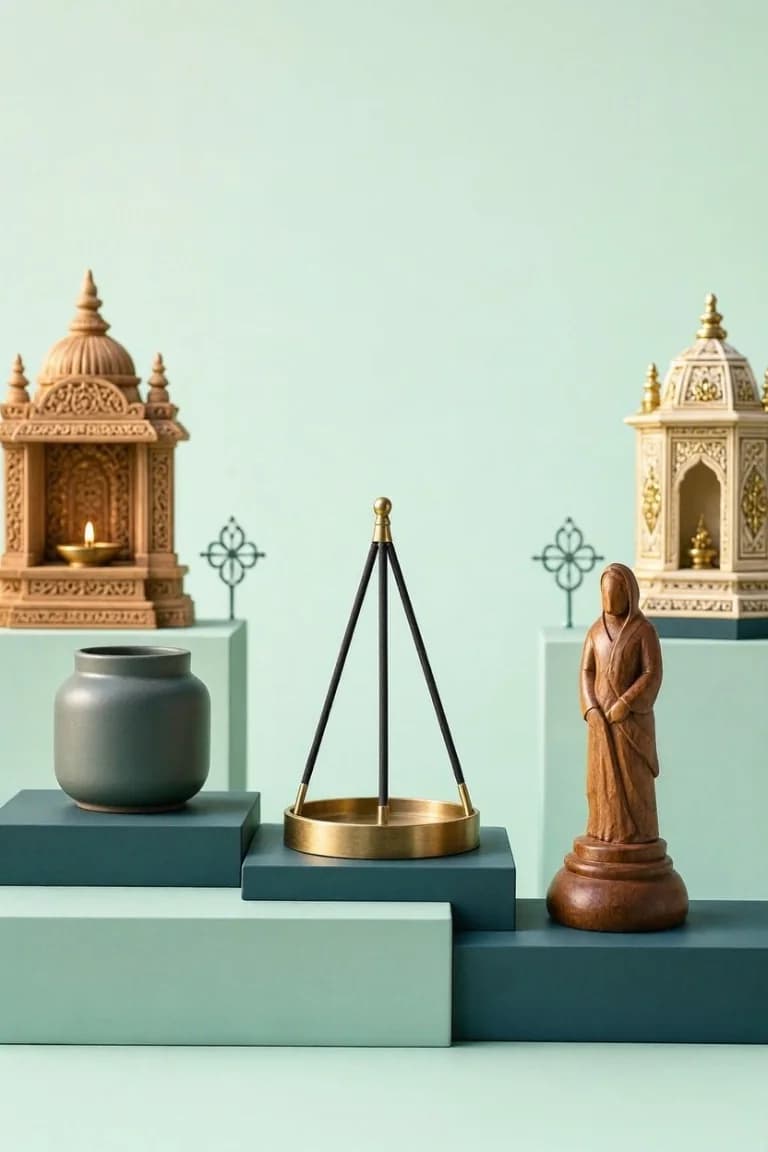
A modern mandir works best when its appearance follows the daily ritual. Before choosing a white surface, a carved panel or a backlit symbol, decide what the space must hold: idols, a lamp, flowers, an offering tray and the objects you put away afterwards. A compact, comfortable arrangement usually matters more than a dramatic photograph.
This guide explains how to specify a solid-surface home temple for an apartment or house. Corian is a brand of solid surface, not a generic name for every white mineral composite. Ask for the actual manufacturer, product grade and care instructions. The manufacturer guidance cited below applies to its named material; it is not certification of every SULoTA design.
Start with the ritual, then draw the footprint
Lay out the objects you use on an ordinary day, including their trays and holders. Measure the full arrangement and the movement needed to reach behind it. An idol can fit on a shelf while still leaving too little room to lift an offering plate safely. Allow space for cleaning and for hands moving around the lamp.
Use masking tape to mark the proposed width and depth on the floor or wall. Test it from the position in which you pray, whether seated on the floor, seated on a chair or standing. There is no single correct shelf height for every household. Doors, drawers and neighbouring furniture should remain usable when someone is at the mandir.
- Record the largest idol and the heaviest item, including its base.
- List daily-use objects separately from occasional festival accessories.
- Check the approach with a chair or mobility aid if anyone uses one.
Specify the surface behind the word “seamless”
A fabricated solid-surface mandir is generally assembled from shaped pieces. Skilled joint preparation and a compatible adhesive can make those connections visually discreet, but the object still has joints, supports and service details. Ask where seams will be placed and inspect a sample in the lighting intended for your room.
Corian describes its solid surface as nonporous and renewable. Its care guide also warns about scratches, strong chemicals and direct heat. These are useful qualities and limitations to discuss together. “Nonporous” does not mean immune to every pigment or to damage from a hot diya. Different colours and finishes also show wear differently; darker colours can reveal light scratches more readily.
References: Corian Design
Choose wall-mounted or freestanding by the complete load
A wall-mounted mandir can preserve floor space and make the area below easier to clean. Its suitability depends on the wall, bracket system, fasteners and loaded weight. Include idols, drawers, lamps and any stone or metal inserts when discussing the load with the installer. A thin panel is not evidence that the finished assembly is lightweight.
Freestanding designs avoid relying solely on a wall bracket, but stability, level support and any necessary anti-tip fixing still need attention. In a rented apartment, check permissions before drilling. Never treat a product photograph as an installation drawing or assume that plasterboard, masonry and concrete can take the same fixing.
Separate lighting design from flame safety
A warm LED light can make pale surfaces feel gentle in the evening. Around 2700–3000 K is a design starting point, not a religious requirement. Review the actual sample, avoid a visible bright strip in the seated sightline and ask for access to the driver when it eventually needs replacement. Use an electrician for concealed wiring.
A diya adds heat as well as light. Plan a stable, heat-resistant holder and a protective arrangement approved for the actual surface. Keep flames away from panels, flowers, fabrics, hanging decorations and wiring. The U.S. Fire Administration recommends stable holders, separation from combustible objects and extinguishing candles before leaving a room. These are useful general open-flame principles, not an Indian mandir installation standard. If the required clearances cannot be provided, use a flameless light.
References: Corian Design · U.S. Fire Administration
Make room for household tradition and comfortable access
Some families prefer a northeast placement according to Vastu traditions; others follow different customs or inherit a specific prayer arrangement. Discuss those preferences as part of the brief. Orientation is a cultural choice, not a substitute for ventilation, safe wiring or adequate circulation, and it does not establish a material’s technical performance.
An attractive corner should also be comfortable for the people who use it. Reach across a mock-up before finalising the shelf depth. Easy-to-grip drawers and reachable switches may be more helpful than an elaborate hidden mechanism. Where accessibility is a priority, have the designer assess the actual users and applicable local requirements.
Build an easy care routine into the handover
After the lamp is extinguished and cool, remove loose residue gently and wipe spills promptly with a cleaner approved for the finish. Corian’s care guidance recommends warm soapy water for many everyday residues and drying after cleaning to reduce mineral film. Do not transfer a branded solid-surface repair method to a painted, coated or unfamiliar cast-mineral product.
At handover, request the material identity, care sheet, mounting information and lighting access details. Record the approved dimensions, finish sample, delivery scope and any site work excluded from the quote. A complete specification makes future maintenance easier and keeps the design conversation grounded in what will actually arrive.
References: Corian Design
Frequently asked questions
Is every white solid-surface mandir made from Corian?
No. Corian is a specific brand. Ask for the named material, manufacturer and care documentation instead of identifying a surface by its colour or appearance.
Can a diya sit directly on solid surface?
Do not place a hot diya directly on the surface. Use a stable heat-resistant holder and a protective arrangement suitable for the specified material, with clearance from combustible objects. Use a flameless alternative where safe clearance is not possible.
What is the best height for a home mandir?
The height depends on whether you pray seated or standing, the idol size and comfortable reach. Test a full-size mock-up with the household before approving the shelf height.
Sources & further reading
Sources checked on 5 November 2026. Technical guidance applies to the named materials and products; follow the current instructions for your specification.
- Use & Care: Corian Solid SurfaceCorian Design
- Candle Fire SafetyU.S. Fire Administration